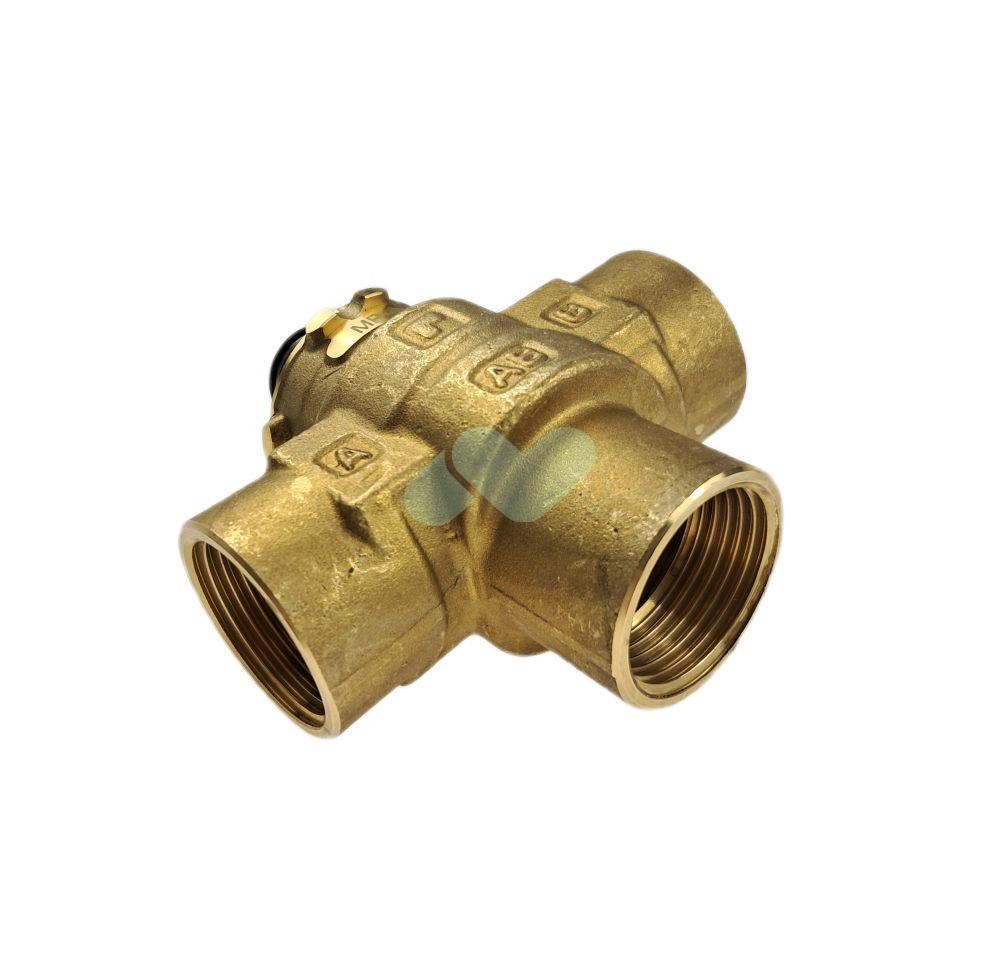
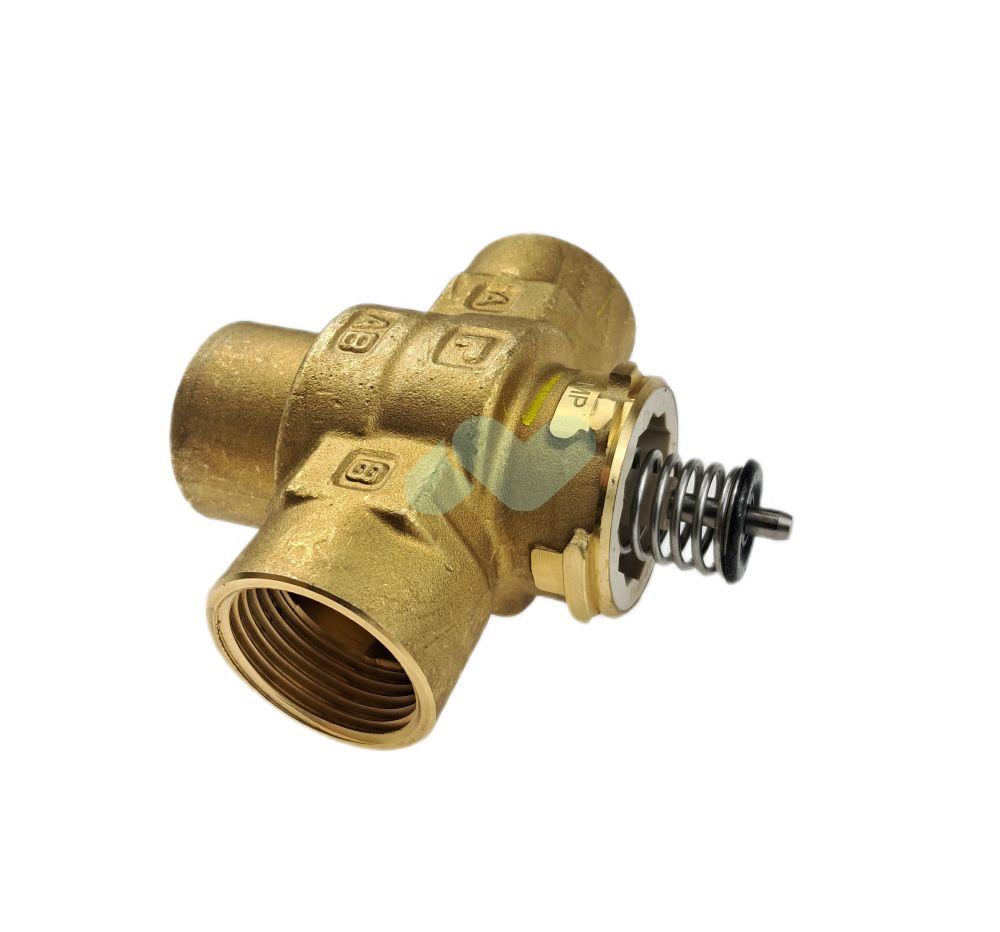
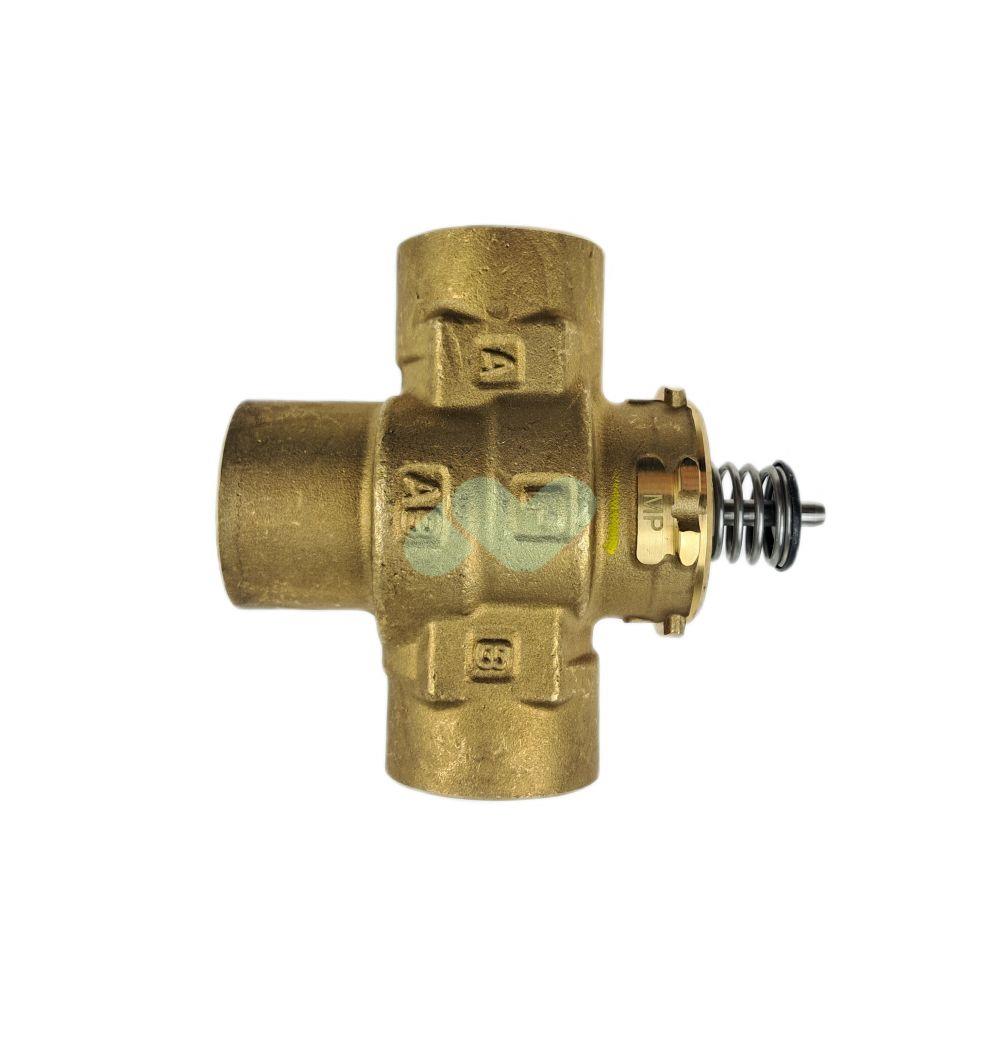
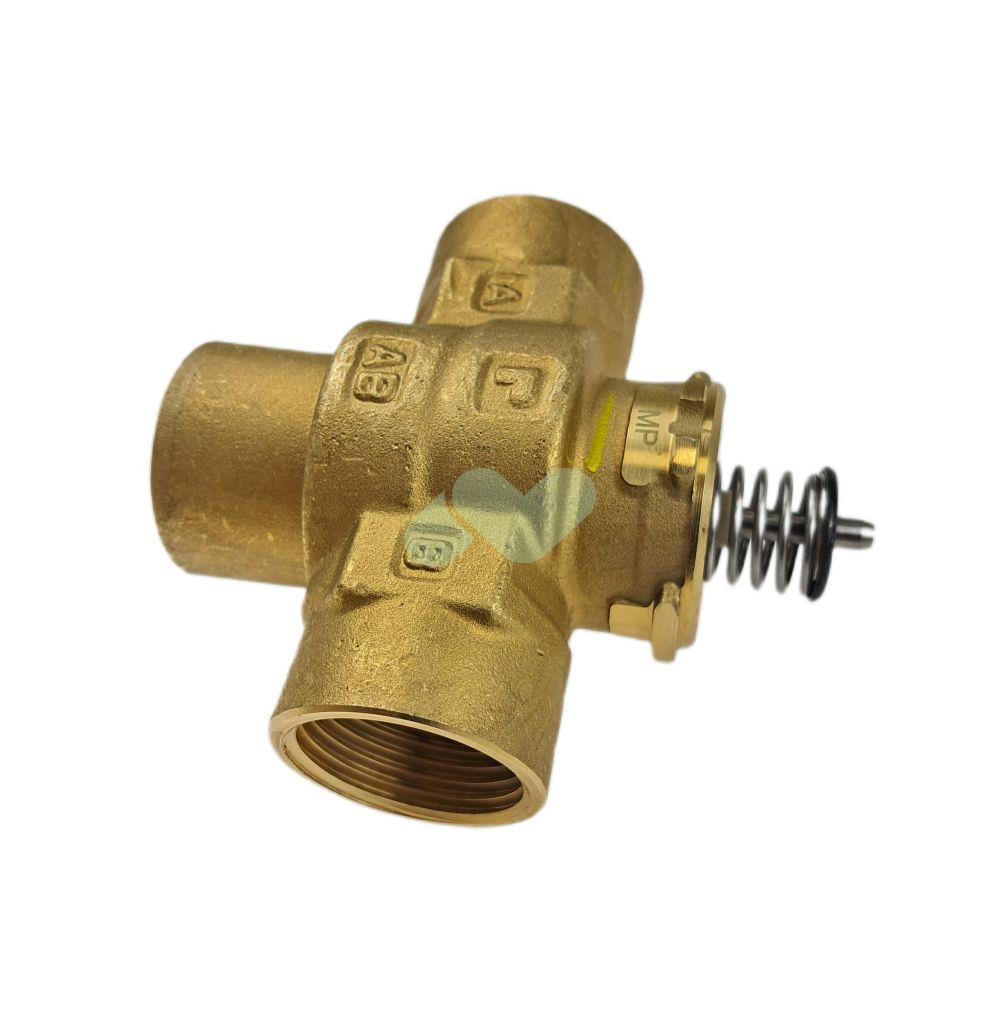
Three-way diverter valve 1" Honeywell VCZMP6000/U

Specification
-
VAT:23,00%
-
Symbol:VCZMP6000/U
Product Description
VC valves with two-position control are used to control the flow of hot/cooling water in heating/cooling systems in domestic and small commercial facilities. 3-way valves are used as dividing valves. It can control a single air conditioner convector, radiator, volumetric heater or convector. Depending on the drive model, the valves can be controlled by SPST or SPDT normally closed/normally closed controllers used in room thermostats, immersion and contact thermostats. VC series valves, thanks to the sinusoidal drive stroke, allow for quiet operation and reduce the effect of water hammer.
The design of the valve piston ensures sealing regardless of the differential pressure created on the valve.
In a 3-way dividing valve, the flow can occur both from AB to A or B and from A or B to AB.
Design:
- Brass body
- Stainless steel stem
- Ryton™ (polyphenylene sulphide) and Noryl™ (polyphenylene oxide) valve insert
Technical data:
- Medium: water or glycol mixture (max. 50% glycol content), according to VDI 2035
- Working temperature: 1-95 degrees Celsius
- Nominal pressure: up to 20 bar
- Differential pressure on the valve: 4 bar
- Kvs value: 7.7 m3/h
- Connections: DN 25 1", Internal thread
Operating principle:
Version with an actuator with SPDT contact:
When a heat demand signal is received, the NO contact of the thermostat is closed, closing through passage B and opening the flow through A. When the flow through A is completely open, the cam mechanism causes the SW1 contact to close and the SW2 contact to open at the same time. When the heat demand signal disappears, the NC contact of the thermostat is closed, causing the motor to be powered through contact SW1 and closing the flow through passage A. When the valve is fully closed, the cam mechanism closes the SW2 contact and simultaneously opens the SW1 contact. The valve will wait for the next heat demand.
Version using an actuator with an SPST contact:
When a heat demand signal is received, the thermostat contact causes RLY1 to be powered and the NO contact on the SW3 relay to close, which leads to the flow being closed through passage B and the flow being opened through A. After the flow through A is fully open, the cam mechanism closes the SW1 contact and opens SW2. Reaching the desired temperature causes the opening